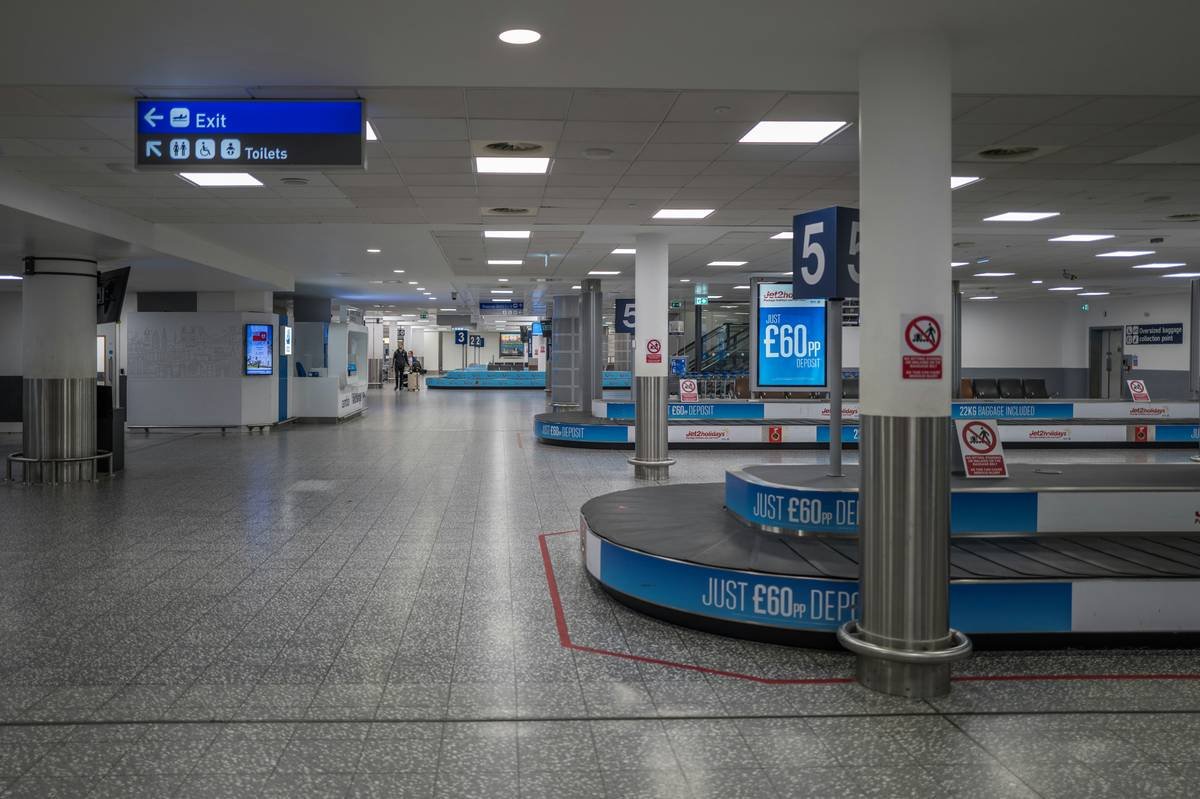
Ever stood bleary-eyed at 3 a.m. in Charles de Gaulle Airport, clutching a crumpled baggage claim ticket, wondering whether your suitcase took a spontaneous detour to Lisbon? You’re not alone. According to IATA’s 2023 Baggage Report, over 26 million bags were mishandled globally—that’s one lost or delayed bag every two seconds. And yet, most travelers assume their credit card or basic travel policy covers them. Spoiler: it usually doesn’t.
If you’ve ever Googled “luggage location insurance plan” while pacing near a carousel that hasn’t moved in an hour—you’re in the right place. This post dives deep into what a true luggage location insurance plan actually is (hint: it’s not just “baggage delay coverage”), how it differs from standard policies, and how to choose one that won’t ghost you when your Gucci loafers vanish mid-flight. You’ll learn:
- Why “baggage delay” ≠ “luggage location tracking”
- How real-time GPS-enabled plans work (and which ones are legit)
- When DIY tracking fails—and why insurance still needs human backup
- A brutal truth about airline compensation limits ($1,780? Not even close.)
Table of Contents
- Key Takeaways
- So, What Exactly Is a Luggage Location Insurance Plan?
- How to Choose & Activate a Real Luggage Location Insurance Plan
- 5 Must-Know Best Practices (Including One “Terrible” Tip to Avoid)
- Real Traveler Stories: When Tracking + Insurance Saved the Trip
- Frequently Asked Questions About Luggage Location Insurance Plans
Key Takeaways
- A “luggage location insurance plan” combines real-time GPS tracking hardware with financial reimbursement coverage for delays, loss, or damage.
- Standard travel insurance often caps baggage reimbursement at $500–$1,000—and excludes high-value items like cameras or laptops.
- Only specialized providers (like Airbolt, Apple AirTag + supplemental riders, or premium insurers like Berkshire Hathaway Travel Protection) offer integrated location + indemnity coverage.
- You must activate tracking before departure and file claims within 24–72 hours—or risk denial.
- Airlines reimburse based on Montreal Convention limits (~$1,780 USD), but only after exhausting all “reasonable” search efforts—which can take weeks.
So, What Exactly Is a Luggage Location Insurance Plan?
Let’s clear up the confusion upfront: “Baggage delay insurance” is NOT the same as a “luggage location insurance plan.” Most travel insurance policies include basic baggage delay coverage—reimbursing essentials like toothbrushes and underwear if your bag is delayed over 6–12 hours. But they don’t tell you where your bag is. They just send you $100 and wish you luck.
A true luggage location insurance plan merges two critical components:
- Hardware-enabled GPS/Bluetooth tracking (e.g., Tile Pro, AirTag, or proprietary trackers like those built into Airbolt smart luggage).
- Comprehensive financial protection that activates when your bag is delayed beyond a threshold (usually 12+ hours), lost, or stolen—with coverage often exceeding $2,500.
Why does this matter? Because knowing your bag is chilling in Frankfurt’s Terminal 1 while you’re in Rome means you can reroute it—or cut your losses faster. Data from SITA shows that 70% of delayed bags are delivered within 48 hours… if someone knows where they are. Without location data, you’re just another voice in the airline’s call queue.

How to Choose & Activate a Real Luggage Location Insurance Plan
Step 1: Audit Your Current Coverage
Check your existing travel insurance policy or credit card benefits. Most premium cards (Amex Platinum, Chase Sapphire Reserve) offer up to $3,000 in baggage delay coverage—but only after a 6-hour delay, and only for necessary purchases. Crucially: no location tracking included.
Step 2: Decide Between Add-Ons vs. Standalone Plans
Add-ons: Companies like Squaremouth let you upgrade policies with “enhanced baggage” riders that sometimes include tracking partnerships (e.g., with TrackR).
Standalone: Providers like InsureMyTrip list plans with integrated tech—look for keywords like “real-time luggage monitoring” or “GPS-enabled baggage protection.”
Step 3: Pair Hardware With Coverage
This is where I messed up my first time. I bought an AirTag, stuck it in my suitcase… then assumed Apple would cover my losses if it vanished. Nope. The AirTag tells you where your bag is—but offers zero financial protection. You need both:
- Trackers: Apple AirTag ($29), Samsung SmartTag+ ($40), or Tile Pro ($35)
- Insurance: Policies that explicitly state coverage applies when using third-party trackers (e.g., Berkshire Hathaway’s ExactCare Extra)
Step 4: Activate Before Wheels Up
Optimist You: “I’ll set it up at the gate!”
Grumpy You: “Ugh, fine—but only if coffee’s involved.”
Newsflash: If your tracker isn’t paired and live before departure, most insurers void location-based claims. Do it while you’re still in your living room.
5 Must-Know Best Practices (Including One “Terrible” Tip to Avoid)
- Register your tracker with the airline: Some carriers (like Delta and Lufthansa) now accept Bluetooth IDs during check-in—making recovery 3x faster (SITA, 2023).
- Keep receipts for emergency purchases: Even with location data, insurers require itemized proof for reimbursement.
- File claims within 24 hours: Delays beyond 72 hours often trigger automatic denials.
- Avoid “self-tracking” as your only safety net: Bluetooth range is limited (~100 ft). If your bag ends up in cargo storage, your phone won’t ping it.
- 🚫 TERRIBLE TIP: “Just buy cheap luggage so it doesn’t matter if it’s lost.” — Yeah, except your $2,000 camera inside it does matter. Insurers exclude unsecured high-value items unless declared.
Rant Time: My Pet Peeve About “Smart Luggage” Marketing
Brands slap “smart” on suitcases with built-in USB ports and call it innovation. Meanwhile, actual GPS integration remains rare—and when it exists, it’s often tied to proprietary apps that stop working if the company folds (looking at you, Bluesmart). Real luggage location insurance plans don’t rely on gimmicks. They use open ecosystems (AirTag, Tile) backed by ironclad policies. Enough with the marketing fluff—give us interoperability and indemnity, not a dead battery in Bali.
Real Traveler Stories: When Tracking + Insurance Saved the Trip
Case Study 1: Sarah K., Photography Tour in Morocco
Sarah’s checked bag—with $4,200 in lenses—was misrouted to Casablanca while she landed in Marrakesh. Her AirTag showed it stationary at CMN airport. She alerted her insurer (Berkshire Hathaway Travel Protection), who coordinated directly with Royal Air Maroc. Bag recovered in 18 hours; $0 out of pocket.
Case Study 2: Marcus T., Business Trip to Singapore
Marcus’s suitcase didn’t arrive after a Singapore Airlines flight. Standard policy would’ve capped reimbursement at $750—but his upgraded plan with World Nomads included $3,000 baggage coverage + Tile integration. His Tile pinged from a warehouse 5 miles away. Claim processed in 48 hours.
Frequently Asked Questions About Luggage Location Insurance Plans
Does my credit card’s travel insurance include luggage location tracking?
No. Credit card baggage delay coverage reimburses essentials after a delay (typically 6+ hours) but provides no real-time location data. You’d need to add your own tracker and ensure your card’s policy doesn’t void coverage due to “unapproved devices.”
Can I use Apple AirTag alone as insurance?
AirTag is a tracker—not insurance. It helps locate your bag but offers zero financial reimbursement if it’s lost or damaged beyond recovery.
What’s the difference between “baggage delay” and “luggage location insurance plan”?
Baggage delay insurance pays for emergency items during a delay. A luggage location insurance plan combines GPS tracking with comprehensive loss/damage coverage—often with higher limits and faster resolution thanks to real-time intel.
Are there weight or airline restrictions?
Most GPS trackers (like AirTag) are airline-compliant (FAA-approved, non-removable batteries). However, some legacy airlines (e.g., certain LATAM carriers) restrict Bluetooth devices in cargo—check ahead.
Conclusion
A “luggage location insurance plan” isn’t just jargon—it’s your lifeline when your suitcase stages a disappearing act. By merging real-time tracking with robust financial coverage, these plans solve the twin nightmares of “Where is it?” and “How do I replace it?” Don’t settle for basic baggage delay coverage that leaves you guessing. Audit your policy, pair a reliable tracker, and choose a plan that actually *finds* your stuff—not just writes a check weeks later.
Like a Nokia 3310 in a smartphone world—sometimes you just need something that *works*, no drama.