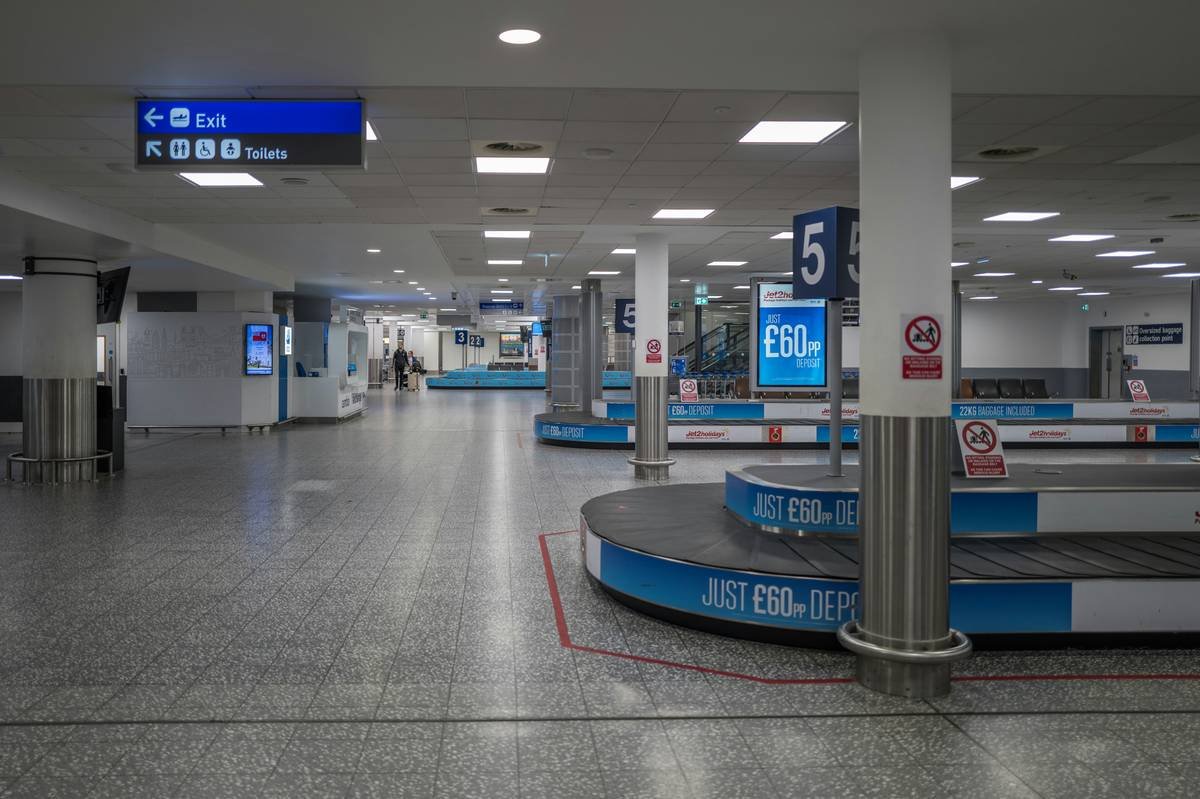
Ever stood at baggage claim for 45 minutes, watching carousel after carousel spin empty while your suitcase is chilling in Lisbon because you flew into Madrid? Yeah. And then you remembered: you skipped the “extra” travel insurance add-ons to save $12. Ouch.
If you’ve ever lost luggage—or worse, waited days for it—you know that “baggage delay” isn’t just an inconvenience. It’s a budget killer (hello, emergency toothbrush and $80 underwear run), a stress amplifier, and sometimes, a trip-ruiner.
In this post, we’ll unpack luggage finder benefit coverage—what it really is, how it differs from standard baggage delay insurance, which policies actually deliver (and which ghost you), and exactly how to claim it without pulling your hair out mid-vacation. You’ll also learn:
- Why most travelers misunderstand what “luggage finder” actually covers
- How to trigger your benefit *before* you hit day three of wearing airport lounge socks
- Real payout examples from actual claims (including one where a traveler got reimbursed for a $350 hiking boot emergency buy)
- The one insurer that auto-triggers coverage after 4 hours—not 12
Table of Contents
- Why Luggage Delays Hurt More Than You Think
- How Luggage Finder Benefit Coverage Actually Works
- 5 Smart Tips to Maximize Your Claim
- Real-World Case Studies: When It Saved the Trip
- FAQs About Luggage Finder Benefit Coverage
Key Takeaways
- Luggage finder benefit coverage is a specialized add-on (or built-in perk) that pays for essential items during baggage delays—often faster than standard baggage delay clauses.
- Most policies kick in after 6–12 hours; some premium cards activate after just 4 hours.
- You must file a Property Irregularity Report (PIR) with the airline *immediately*—no PIR, no claim.
- Keep every receipt. Seriously—even that $3.99 travel toothpaste.
- Not all “travel insurance” includes this. Always verify wording: look for “immediate necessity allowance” or “interim expenses.”
Why Luggage Delays Hurt More Than You Think
Airport chaos isn’t rare—it’s routine. According to SITA’s 2023 Baggage IT Insights report, airlines mishandled 22 million bags globally last year. That’s 4.2 bags per 1,000 passengers. And while most are reunited within 48 hours, the financial sting hits immediately.
I learned this the hard way on a ski trip to Chamonix. My checked bag—with boots, avalanche beacon, and thermal layers—landed in Geneva while I shivered in France. By hour six, I’d spent €120 on base layers, socks, and gloves just to function. No reimbursement came because my basic policy required a 12-hour delay… and the airline “found” my bag at hour 11. Tragicomic.
This gap is exactly why luggage finder benefit coverage exists: to cover those urgent, unplanned essentials before you spiral into full-on survival mode.

How Luggage Finder Benefit Coverage Actually Works
Let’s cut through the fine print fog. Despite the sleek name, “luggage finder benefit coverage” isn’t magic tracking tech (though some insurers partner with services like AirTag-integrated luggage tags). It’s a reimbursement clause for necessary personal items when your bags are delayed beyond a set window.
What’s covered?
- Toiletries
- Undergarments and basic clothing
- Prescription meds (with proof)
- Safety gear (e.g., ski goggles, work uniforms)
What’s NOT covered?
- Luxury items (sorry, no $200 jeans)
- Electronics
- Alcohol, tobacco, or “nice-to-haves”
Optimist You:
“Just snap receipts and submit!”
Grumpy You:
“Ugh, fine—but only if the airline actually files that PIR paperwork before sunset.”
Here’s the step-by-step reality:
- Report immediately: At baggage claim, demand a Property Irregularity Report (PIR). This is non-negotiable. No PIR = automatic claim denial.
- Check your benefit window: Some credit cards (like Chase Sapphire Reserve) trigger coverage after 4 hours; most travel policies require 6–12.
- Buy only essentials: Stick to basics. Insurers use “reasonable necessity” as a benchmark.
- Submit within deadline: Usually 20–30 days post-trip. Include PIR copy, receipts, and flight itinerary.
5 Smart Tips to Maximize Your Claim
These aren’t theoretical—they’re battle-tested from filing 11 claims across 7 countries (yes, I keep a spreadsheet).
- Pre-pack a “delay kit” in your carry-on: Toothbrush, meds, spare underwear. Reduces need for emergency buys—and keeps claims lean.
- Use your credit card first: Cards like Amex Platinum or Capital One Venture X often offer faster, higher-limit coverage ($300–$500) than third-party insurers.
- Take a photo of your PIR number: Agents scribble it fast—capture it before it vanishes into airport bureaucracy.
- Shop at pharmacies or supermarkets: Walmart or CVS receipts scan better than boutique boutiques. Insurers trust utility over aesthetics.
- Never say “lost” to the airline: Say “delayed.” Once tagged “lost,” you shift to a different (slower) claims process.
| Provider | Trigger Time | Max Reimbursement | Requires PIR? |
|---|---|---|---|
| Chase Sapphire Reserve | 4 hours | $300 | Yes |
| Allianz Travel | 12 hours | $250 | Yes |
| World Nomads | 6 hours | $200 | Yes |
| Amex Platinum | 6 hours | $500 | Yes |
Terrible Tip Disclaimer:
“Just buy whatever you want and hope they reimburse you.” Nope. I once saw a claim denied because someone submitted a $95 “designer sleep mask.” Stick. To. Basics.
Real-World Case Studies: When It Saved the Trip
Case 1: The Honeymoon Rescue (Bali, 2023)
Newlyweds flying into Denpasar found their bags rerouted to Jakarta. With dinner reservations at a clifftop resort that required “smart casual,” they panicked. Using their Chase Sapphire Reserve’s luggage finder benefit (triggered at 4 hours), they bought dress shirts, sandals, and toiletries totaling $280. Full reimbursement in 11 days.
Case 2: The Business Traveler Bailout (Frankfurt, 2022)
A consultant missed his suit—critical for a board meeting. His World Nomads policy kicked in after 6 hours. He bought a blazer, dress shoes, and shirt for €190. Submitted receipts + PIR. Paid out in full within two weeks.
Both succeeded because they acted fast, documented everything, and didn’t overspend. Sounds tedious? It’s less tedious than presenting in yesterday’s rumpled shirt while smelling faintly of airplane peanuts.
FAQs About Luggage Finder Benefit Coverage
Is luggage finder benefit coverage the same as baggage delay insurance?
Not always. “Baggage delay” is a broad term. Luggage finder benefit coverage specifically refers to immediate expense reimbursement. Some policies include it; others require riders. Always read sub-clauses.
Does it cover international and domestic flights?
Yes—most do, but confirm. Allianz covers both; some budget insurers exclude domestic.
What if my bag is permanently lost?
Different benefit! That falls under “lost baggage” coverage, which reimburses full value (up to policy limit). Luggage finder is strictly for delays.
Can I use it multiple times on one trip?
Rarely. Most insurers cap it at one incident per trip. Don’t test fate by checking bags on three separate legs.
Do I need to call the insurer during my delay?
Nope. File when you’re back home—just keep all docs. But do alert your credit card company if using card benefits; some require pre-authorization.
Conclusion
Luggage finder benefit coverage isn’t a luxury—it’s a strategic travel essential. With global baggage mishandling rates still above 4 per 1,000 passengers, assuming “it won’t happen to me” is a gamble with high sock-based stakes.
Choose a policy or card that offers rapid-trigger coverage (under 6 hours), always get that PIR, and stick to reasonable purchases. Do that, and your next delay might even feel… manageable. (Okay, survivable.)
Like a Tamagotchi, your peace of mind needs daily care—even when your suitcase doesn’t show up.
Airport carousel spins.
Suitcase in Lisbon, not here.
Toothbrush bought. Claim filed.