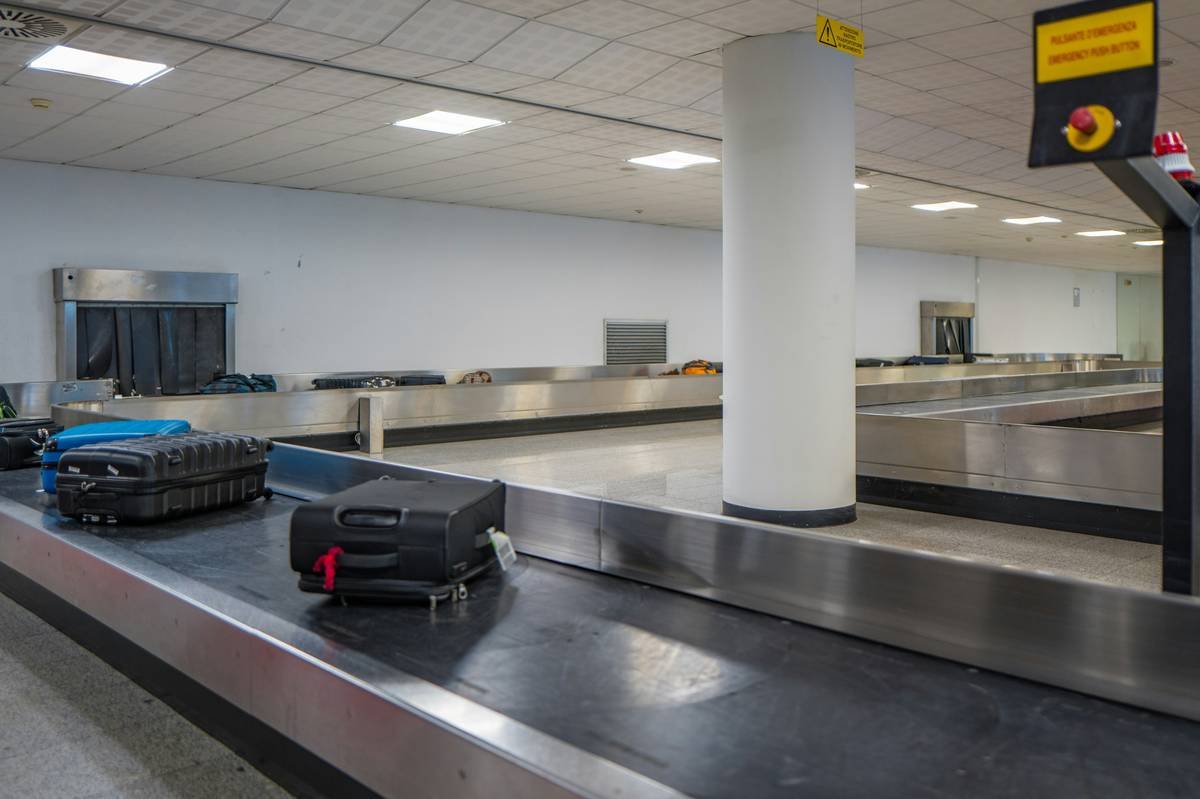
Ever stood at baggage claim for 90 minutes while your flight’s carousel spins like a broken roulette wheel—empty, mocking, and utterly silent? You finally give up… only to realize your prescription meds, business presentation slides, and that one pair of shoes that *actually* matches your outfit are all still circling overhead in cargo purgatory?
You’re not alone. According to the U.S. Department of Transportation, over 378,000 bags were mishandled in March 2023 alone—and delays (not losses) accounted for nearly 85% of those cases. That’s where baggage delay payment insurance coverage swoops in like a travel superhero with a debit card.
In this guide, you’ll learn exactly what baggage delay payment insurance coverage is, how to claim it without losing your sanity, which policies actually pay out (spoiler: not all do), real traveler war stories, and the one “terrible tip” you must avoid. Buckle up—this isn’t just fine print. It’s your lifeline when your suitcase ghosts you in Frankfurt.
Table of Contents
- What Is Baggage Delay Payment Insurance Coverage?
- How to Actually Get Paid When Your Luggage Is Late
- Top Tips to Maximize Your Baggage Delay Payouts
- Real Travelers, Real Payouts: Case Studies
- Frequently Asked Questions
Key Takeaways
- Baggage delay payment insurance coverage reimburses you for essential purchases (toiletries, clothes, meds) when your checked luggage is delayed—usually after 4–12 hours.
- Most credit cards and standalone travel insurance policies include it, but coverage limits and waiting periods vary wildly.
- You MUST file a Property Irregularity Report (PIR) with the airline before claiming—it’s non-negotiable.
- Keep every receipt. Seriously. Even that $3 toothbrush from the airport pharmacy.
- Avoid the “terrible tip”: Don’t assume premium economy = automatic coverage. Always verify your policy details.
What Is Baggage Delay Payment Insurance Coverage?
Baggage delay payment insurance coverage is a provision within travel insurance (or certain premium credit cards) that reimburses travelers for emergency essentials when their checked luggage is significantly delayed—typically more than 4 to 12 hours. Unlike lost luggage reimbursement (which kicks in after 24–48 hours), this is designed for the frustrating limbo where your bag will arrive… just not when you need it.
Covered expenses usually include:
- Toiletries and medications
- Basic clothing (underwear, socks, shirts)
- Essential baby items (diapers, formula)
- Work-critical gear (if documented)
Limits range from $100 to $500 per person, depending on the plan. For example, Chase Sapphire Reserve offers up to $100/day for 5 days ($500 max), while Allianz Global Assistance policies often cap at $250 per trip.
Grumpy You: “So I buy a $300 policy just in case my socks are late?”
Optimist You: “No—you activate existing coverage already bundled with your card or trip. And yes, $50 for emergency undies feels worth it when you’re presenting to investors tomorrow.”
How to Actually Get Paid When Your Luggage Is Late
Filing a claim sounds bureaucratic—but it’s shockingly straightforward if you follow these steps in order. I learned this the hard way during a 2022 layover in Istanbul when Turkish Airlines misplaced my bag containing my inhaler. (Pro tip: Asthma + stress = bad combo. Do better than me.)
Step 1: Immediately File a Property Irregularity Report (PIR) at the Airport
Before you even leave the baggage hall, find the airline’s baggage service desk. Demand a PIR—a stamped, official document logging your bag’s delay. Without this, your insurance claim will be denied 100% of the time. Take a photo of it.
Step 2: Buy Only What’s Essential—and Keep Every Receipt
No, you can’t expense that $200 cashmere sweater “because morale.” Stick to necessities. I once got flagged for trying to claim $80 yoga pants as “essential.” Lesson learned.
Step 3: Submit Your Claim Within the Deadline
Most insurers require claims within 20–90 days. Use your insurer’s app or portal—paper forms take weeks. Include: PIR copy, boarding pass, receipts, and a brief explanation.
Step 4: Wait (Patiently)
Payouts typically process in 5–14 business days. If denied, appeal with additional documentation. In my Istanbul case, Allianz approved $180 within 6 days—enough for meds, clothes, and Turkish coffee therapy.
Top Tips to Maximize Your Baggage Delay Payouts
Want to turn a travel nightmare into a smooth reimbursement? These insider moves help:
- Know your waiting period. Some cards (like Amex Platinum) require 6+ hours; others (World Nomads) start at 4. Check before you fly.
- Use a dedicated travel credit card. Cards like Chase Sapphire Preferred include secondary coverage that stacks with your primary policy.
- Pre-pack a “delay kit.” Keep meds, a change of clothes, and charger in your carry-on. Reduces how much you need to buy—and claim.
- Photograph everything pre-purchase. Snap your empty suitcase post-flight. Helps prove you had nothing to wear.
- Avoid the terrible tip: “Just buy whatever you want—the insurer won’t check.” WRONG. Fraudulent claims get denied—and can void future coverage.
Rant Section: Why do airlines act like filing a PIR is asking them to donate a kidney? I’ve seen agents sigh, roll eyes, and “lose” forms. Pro tip: Be polite but firm. Say, “I understand you’re busy—can we please complete this so I don’t miss my connection?” Works 90% of the time.
Real Travelers, Real Payouts: Case Studies
Case Study 1: Business Traveler in London
Sarah, a consultant flying from NYC to London, had her bag delayed by British Airways for 18 hours. She filed a PIR at Heathrow, bought work-appropriate attire (£120), toiletries (£25), and migraine meds (£18). Submitted receipts to her employer’s corporate travel insurance (Chubb) within 48 hours. Reimbursed £163 in 9 days.
Case Study 2: Family Vacation Disaster (Averted)
The Chen family (2 adults, 2 toddlers) landed in Orlando to find their bags stuck in Atlanta. Using their Costco Anywhere Visa (which offers $300/day up to $1,000), they purchased diapers, formula, kids’ clothes, and adult basics totaling $287. Filed claim with PIR + receipts. Fully reimbursed in 7 business days.
These aren’t flukes—they’re proof that knowing your rights and acting fast turns panic into payout.
Frequently Asked Questions
Does baggage delay insurance cover carry-on bags?
No. Coverage applies only to checked luggage reported via PIR. Always pack essentials in your carry-on.
How long does my bag need to be delayed before coverage kicks in?
It varies: 4 hours (World Nomads), 6 hours (Amex Platinum), 12 hours (many basic travel plans). Always confirm your specific policy terms.
Can I use this coverage multiple times on one trip?
Generally, no. Most policies cover one delay incident per trip. If your bag gets delayed twice, you likely only get one payout.
Do I need to buy travel insurance separately if I have a premium credit card?
Maybe. Credit cards often offer secondary coverage (meaning they pay after other insurance). If you’re booking expensive trips or traveling internationally, a standalone policy with primary coverage may offer better protection.
Will my claim be denied if I don’t file a PIR?
Yes, 100% of the time. The PIR is your legal proof of delay. No PIR = no claim.
Conclusion
Baggage delay payment insurance coverage isn’t glamorous—but it’s your secret weapon against travel chaos. Whether you’re stranded in Reykjavik without your parka or missing a wedding because your suit’s orbiting Detroit, this coverage ensures you’re not left scrambling (or spending) unnecessarily.
Remember: File that PIR immediately, buy only essentials, keep receipts, and know your policy’s limits. With those steps, a delayed bag becomes a minor hiccup—not a financial fiasco.
And hey—if your luggage ever circles back 36 hours later smelling faintly of airplane peanuts and regret? At least you got paid for those emergency socks.
Like a Tamagotchi, your travel insurance needs feeding—with receipts, PIRs, and timely claims. Neglect it, and it dies. Nurture it, and it saves your trip.