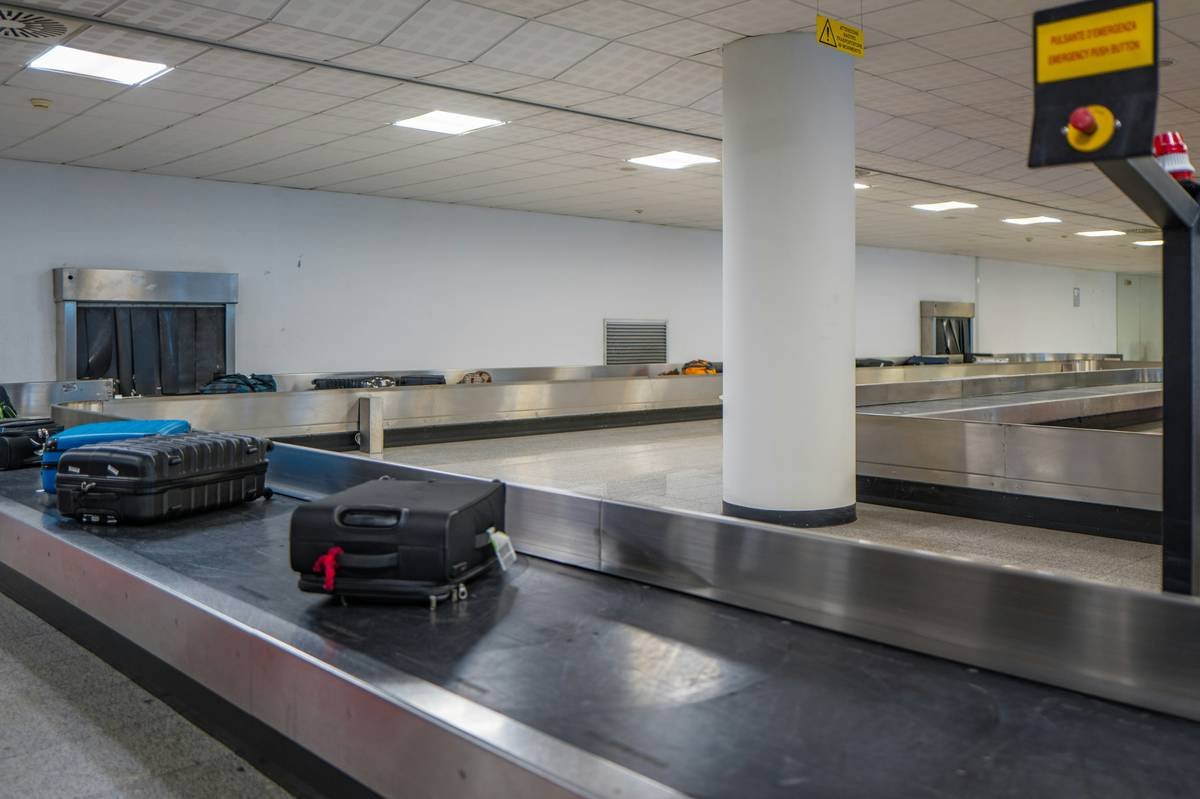
Imagine this: You land in Lisbon after a red-eye from Chicago, shuffle to baggage claim, and… nothing. Your suitcase is MIA. No spare contacts. No prescription meds. Not even your favorite wrinkle-resistant shirt for tomorrow’s client pitch. You’re stranded with just the clothes on your back—and a sinking feeling that “travel insurance” sounded way more reassuring on paper.
If you’ve ever been stranded without luggage, you know the panic isn’t just about inconvenience—it’s about disruption. That’s where a baggage tracking coverage plan comes in: not as a luxury add-on, but as essential gear for modern travelers.
In this post, we’ll demystify baggage tracking coverage plans: what they actually cover (spoiler: it’s more than you think), how they differ from basic airline liability, real-world scenarios where they saved travelers thousands, and exactly how to choose the right one—without getting nickel-and-dimed by fine print.
Table of Contents
- Key Takeaways
- Why Baggage Delays Are More Than an Inconvenience
- How to Choose a Baggage Tracking Coverage Plan That Actually Works
- 5 Pro Tips for Maximizing Your Coverage
- Real Story: My Suitcase Vanished in Frankfurt—Here’s How Coverage Saved Me
- FAQs About Baggage Tracking Coverage Plans
- Final Thoughts
Key Takeaways
- A baggage tracking coverage plan reimburses you for essential purchases if your bags are delayed 6–12+ hours (varies by policy).
- Airlines only reimburse up to $3,800 internationally (per Montreal Convention)—and only after extensive paperwork.
- Most travel insurance policies include baggage delay coverage, but standalone “tracking” features (like real-time alerts) are rare and often misunderstood.
- You must file a Property Irregularity Report (PIR) with the airline to qualify—no PIR, no payout.
- Pre-existing conditions don’t apply—but high-risk items (jewelry, electronics) often have sub-limits or exclusions.
Why Baggage Delays Are More Than an Inconvenience
Let’s be brutally honest: losing your bag isn’t just “oops, need to buy socks.” For business travelers, it can mean missing meetings in stained shirts. For families, it’s scrambling for diapers at midnight in a foreign pharmacy. For anyone on medication? It’s a health risk.
According to SITA’s 2023 Baggage IT Insights Report, airlines mishandled 22 million bags globally—that’s 4.2 bags per 1,000 passengers. While that’s down from pandemic peaks, it’s still a 1-in-238 chance your bag won’t arrive when you do.

And here’s the kicker: airlines aren’t legally required to compensate you unless the delay exceeds 24 hours (domestically) or involves international travel under the Montreal Convention. Even then, reimbursement caps out at ~$1,700 domestically and $3,800 internationally—and only after you submit receipts, PIR forms, and sometimes proof you actually needed that $200 sweater you bought.
Grumpy You: “Ugh, bureaucracy soup.”
Optimist You: “Good thing your travel insurance cuts through the red tape!”
How to Choose a Baggage Tracking Coverage Plan That Actually Works
Not all “baggage coverage” is created equal. The term “baggage tracking coverage plan” is often used loosely—some insurers use it to mean real-time GPS tracking (rare), while others just mean standard delay reimbursement (common). Here’s how to cut through the noise.
Does it cover delays of 6 hours—or 24?
Top-tier providers like Allianz Global Assistance and World Nomads trigger coverage after just 6 hours of delay. Budget plans might require 12 or 24 hours. For a 2-day business trip? Waiting 24 hours renders coverage useless.
What’s the reimbursement limit per day?
Typical daily limits range from $100–$500. If you’re in Tokyo and need a suit, $100 won’t cut it. Look for policies with at least $250/day—and confirm whether it’s per person or per family.
Is real-time tracking included?
True “tracking” usually means integration with apps like AirTag or Tile—but very few insurers offer this as part of the policy. Instead, they rely on your airline’s tracking system. Don’t fall for marketing fluff: ask, “Can I get SMS alerts if my bag’s rerouted?” If the answer’s no, it’s just delay coverage—not tracking.
What documentation is required?
You must get a PIR (Property Irregularity Report) from the airline at the airport. No exceptions. Take a photo of it before leaving the terminal—because if you lose that slip, most insurers will deny your claim.
5 Pro Tips for Maximizing Your Coverage
- Pack essentials in your carry-on. Medications, a change of clothes, phone charger—assume your checked bag will vanish.
- File a PIR immediately. Don’t wait until you reach your hotel. Airline staff at baggage claim can issue it on the spot.
- Save every receipt. Toothpaste? Receipt. Metro ticket to the pharmacy? Receipt. Insurers want itemized proof of necessity.
- Know your sub-limits. Most policies cap electronics at $500 and exclude cash, jewelry, or perishables. Read Section 5 of your policy wording.
- Use apps like TripIt or Google Trips. Some insurers (e.g., Berkshire Hathaway Travel Protection) auto-trigger claims if your flight data shows baggage delay + hotel check-in mismatch.
Rant Time: Nothing grinds my gears more than insurers listing “baggage tracking” as a feature when all they offer is a PDF checklist titled “How to Track Your Bag.” Real-time location sync? Nah. Just vibes and paperwork. Call it what it is: delay reimbursement—not tracking.
Real Story: My Suitcase Vanished in Frankfurt—Here’s How Coverage Saved Me
Last October, I flew Lufthansa from Denver to Berlin via Frankfurt. My bag never left Texas. At FRA, I filed a PIR (took 20 minutes—worth every second). By hour 8, I was in downtown Berlin with flip-flops and yesterday’s t-shirt.
Thankfully, my World Nomads policy kicked in at the 6-hour mark. Over the next two days, I spent €320 on clothes, toiletries, and a universal adapter. Submitted receipts + PIR photo via their app. Got reimbursed in 5 business days—no calls, no runaround.
Without that baggage tracking coverage plan? I’d have eaten into my trip budget just to stay presentable. And missed my keynote in sweatpants. The shame!
FAQs About Baggage Tracking Coverage Plans
Does baggage tracking coverage plan cover lost luggage forever?
No—it covers delayed bags (usually 6–24 hours). If your bag is declared lost (typically after 5–7 days), you file a separate “lost baggage” claim. Make sure your policy includes both.
Can I buy it after I’ve already departed?
Almost never. Travel insurance must be purchased before departure—ideally within 10–14 days of your first trip deposit for full cancellation benefits.
Do credit card travel insurances include this?
Some premium cards (Amex Platinum, Chase Sapphire Reserve) offer secondary baggage delay coverage—but often with lower limits ($100–$300) and longer waiting periods (12+ hours). Always check your Guide to Benefits.
What’s the worst “tip” I’ve heard?
“Just tell the insurer you lost your PIR—they’ll believe you.” TERRIBLE ADVICE. Claims without a PIR are auto-denied. Period. Don’t risk it.
Final Thoughts
A baggage tracking coverage plan isn’t about paranoia—it’s about preparedness. With 22 million bags going walkabout last year alone, assuming “it won’t happen to me” is flying blind. The right policy doesn’t just reimburse you; it gives peace of mind that lets you focus on your trip, not your suitcase.
So before you zip up that checked bag, ask: “If this vanishes, can I afford to replace what’s inside—on the spot, in a foreign city?” If the answer’s shaky, it’s time to invest in proper coverage.
Like a 2000s Tamagotchi, your travel insurance needs attention before you really need it—or it dies on arrival.
Lost in transit,
Reimbursed by dawn's first light—
Baggage stress is gone.